Using games in public places


Marcus Toftedahl  is a games researcher, developer and lecturer at the University of Skövde, Sweden. His main competences lies within game design and narrative design, both from a development and research perspective. His main research interests are within serious games, gamification and the processes found behind game development - all from an inclusive game development perspective. Marcus has worked at the University of Skövde since 2009 and has since he started co-developed the world's first full concentration game writing education at University level as well as teaching game design and game production in general. Marcus have led multiple game development projects as a part of the University's digital game research, focusing mostly on using games in public spaces. Since summer of 2016 Marcus is focusing on his PhD project in Socio-technical systems researching the mechanisms behind being a local game developer in a global industry.Recently , a special lecture - 'Using Digital Games in Museums and on Cultural Heritage Sites' was given  by Marcus  at  the Indian Museum, Kolkata.

In the United States video game are starting to become more acceptable as a form of art, while in Asia they are often revered. What is the cultural perception of games in Sweden?

Regarding the cultural acceptance of games in Sweden, I would say it is very accepted - and even sought after. Sweden have had a long tradition of making successful games in the entertainment sector, with games such as Minecraft, Battlefield and Candy Crush Saga being from Sweden and this reflects on other parts of the gaming industry as well. At my university, University of Skovde, we have a constant stream of project proposals from external partners, such as museums, cultural heritage site which I talked about in my session at the Indian Museum, but also from other societal functions such as rescue services and the military.

In the last decades digital games have been used in other areas of knowledge instead of entertainment. Why have these applications been so well received?

I believe that since games are more or less everywhere nowadays, with people playing digital games on their mobile devices such as smartphones, digital games have been more accepted. This knowledge of games, that digital games exists, spills over on other uses as well. In Skovde, we started our university level game development programs in 2002 and at the same time we started doing research projects on digital games and this is also important for the wider use of games.

As a researcher I don't have any commercial interests in the games I make, which also adds to that we can make games that might not be commercially "right" but instead expands the use of games and further the gaming medium.


How can digital games transform museum experience?

With participation and interaction. We like to play, we like to learn and if these two things are combined in the right way it can enhance the experience of learning new, or old, things at the museum. It is important to state that games should not be intrusive at a museum, it should still be a museum - not a gaming den! It needs to be well integrated in the museum experience.

To what extent do you think that integrating games into the classroom promotes new types of learning that can be achieved no other way?

A little bit the same as games at the museum. Games should and could be a compliment to other forms of teaching. It should not replace books or teachers, but be used to enhance the learning for example by collaborating over a given scenario, building a historic site in Minecraft and then discuss it thereafter. But there are challenges of course, there are not many games well suited for school use yet and it demands work from the educators to adopt games into the curriculum. But, I believe we will see more of it in the future.

What’s your expectation over the near future? In five years, what will the industry be like?

Bigger, better and hopefully more inclusive. Today there are for instance about 90% men working with game development. This needs to change - because there are 50% female players. The industry needs to broaden its views, to actively work for more inclusive. Not only in gender, but also cultural background and more people from all walks of life. This is the greatest challenge the games industry faces today from my point of view.

What advice would you give to any artists or developers who are thinking about  going the independent route with their game concepts?

Be in contact with other developers and with your players! Talk about your games, show them to others and find your own voice. You can imitate at first, to train your skill level as a craftsman but later on you need to find your own voice to stand out. It is a competitive market, so you really need to find your target audience and your own niche.

Photo courtesy - Indian Museum, Kolkata

1

"When you practice yoga regularly, your mind opens up to a new level of consciousness"


Sabine Utz has been practicing the Bikram yoga sequence almost every day for more than 10 years. In the autumn of 2008, she completed her training as a 'Certified Bikram Yoga Teacher' .After winning the 'European Yoga Asana Championships 2009' and participating in the 'International Yoga Asana Championships 2010', she became Austrian Champion of the 'European Qualifying Championships' in Madrid in 2011. She and her husband run the Yoga-loft in Vienna. Recently she was here at the Ghosh's Yoga College for a yoga therapy training course.


What brought you to yoga?

In 2003, a friend of mine introduced me to yoga. It was Ashtanga Vinyasa Yoga. I liked it and kept doing it.

How did you first come across Bikram Yoga?

I was working in the film industry. I was an assistant director and script supervisor. I read alot about Bikram Yoga. It was very popular. A studio had just opened in Vienna, so me and my husband took our first lesson together. It was very exhausting but I was immediately hooked and kept coming back. I was travelling a lot during those days for my work. During free time I did lots of yoga. Somehow I just left my professional life and went to teacher training. 


What is the most important lesson you have learnt being a yoga teacher?

Trust the process. Do yoga. Just do your practice and the rest will follow. This actually happens. When you practice yoga regularly, your mind opens up to a new level of consciousness and you understand things which you couldn’t understand before. There is a transformation happening in both your body and mind.

There are yoga sites that offer online subscriptions to follow yoga classes and yoga therapy.  Your thoughts on online yoga classes?

It is a very western approach. It is a business approach. Practicing online is so much different than practicing in person with a certified teacher. Traditionally yoga was taught one-on-one. For instance in Ghosh's Yoga College. You will receive one on one attention from Muktamala Mitra (principal of the Ghosh's Yoga College) and benefit from the family-style atmosphere. The primary focus of the training is on learning therapeutic exercises to heal your body and mind.  Yoga is a very personalized form of exercise. You need different yoga postures/asanas for each individual to get the most therapeutic benefit out of it. Online yoga classes are not ideal because they lack the presence of a guiding teacher. There is a higher risk of injury especially for beginners.


Yoga is now increasingly moving to air-conditioned enclosures within homes, fitness centres or attractive resorts. How do you see the Commercialization of Yoga: Boon or bane?

Anything that makes people practice yoga is good! It brings more benefit healthwise for the people. Whatever yoga you practice or wherever you practice, it doesn’t matter; just make sure the teacher is qualified, knows the body and your personal limits.

Your word of advice for those who want to start learning yoga?

Look for a good teacher. One needs to learn yoga in a personalized environment. For instance in Kolkata, Ghosh's Yoga College is the best place to learn.

Please tell us about your studio 'Yoga-loft Vienna' ?

It's been open for five years now. Our main focus is Bikram Yoga, but we offer complimentary practices as well, like Yoga Therapy, Yin Yoga,  Pranayama classes, meditation classes and also special classes and workshops. Our basic focus are the therapeutic benefits of yoga. We try to create the best atmosphere to practice, to unwind and relax.

1

Piano Endeavors

                                                                      Pic Courtesy - www.ceccarelligiovanni.com

Giovanni Ceccarelli is an Italian pianist, composer, arranger and artistic producer. His numerous musical projects vary from piano solo to quartet, from jazz to songwriting, from concerts to performances and live soundtracks. Giovanni has released nine albums as leader or co-leader, one of which was nominated for the “Latin Grammy Awards”. Giovanni Ceccarelli, was part of the trio of musicians ( Marcello Allulli (sax), Giovanni Ceccarelli (piano) and Matteo Fraboni (drums)), who have composed and played live for the cine concert, around the film 'Cenere' (Ashes), which was screened & performed at the Victoria Memorial, Kolkata.


                                                   Pic Courtesy - Amlan Biswas
How did you start playing piano?

I started playing piano at the age of 7, when my best school friend encouraged me to take piano lessons with him in my hometown. I grew up in a musical environment, because my father loves music: he listened to all styles of music, organized chamber music concerts, and practiced different musical instruments.

Who and what do you consider to be your musical influences?

I love listening to music and my tastes are very wide and diverse, including jazz, chamber and symphonic, baroque, classical Indian, Brazilian, Cuban, folk, pop, rock music, and more. Certainly my music listening shaped the way I feel, conceive, play, and compose music. The pianists I truly love are Bill Evans, Keith Jarrett, Thelonious Monk, Herbie Hancock, Chick Corea, Tom Jobim, Dr. John, Glenn Gould, Arturo Benedetti Michelangeli. Other very important influences in my way of making music are certainly the Beatles, João Gilberto, Miles Davis, and Johann Sebastian Bach.


                                                  Pic Courtesy - www.ceccarelligiovanni.com
You have released several albums. How do you decide what to put on an album?  Do you wait for inspiration to knock you upside the head or do you sit down and say, “It’s time to work on some new music”?

I prefer working on specific musical projects, rather than just assembling a series of tunes. Each album is for me a coherent work, starting from which musicians to involve, in what direction to go concerning the music to compose and/or arrange where to record, and so on. It is never a cerebral process which brings me to releasing an album, but rather a special encounter, or a strong wish to collaborate with some musician, or the will to put on a record some music that I have been performing.

                                                 Pic Courtesy - www.ceccarelligiovanni.com
I have found it really interesting that many of the composers I know have very different processes when it comes to naming their pieces. How do you do it?

Usually I first compose the music, and then I make a home recording of it. At this point I sit down and listen, and suddenly the music evokes a place, a feeling, a person, a concept, or a state of mind. The right title comes up easily at this point.


What has been the most memorable project for you so far?

I feel very happy and grateful for having the chance to play with some wonderful musicians and human beings, and for taking part in some very special groups and projects. Certainly my group InventaRio, which was founded by my friend Ferruccio Spinetti and myself, is a very dear one to me. Our second album in collaboration with the great Ivan Lins was nominated for the Latin Grammy Awards in 2014. I also cherish my long time collaboration with my friend Marcello Allulli. Our Live soundtrack to silent movie "Cenere", which we are presenting on tour in
                                   Pic Courtesy - Amlan Biswas
India with Matteo Fraboni, has brought us to performing throughout the world. I also have the chance to collaborate with a great musician, the bandoneon player and composer Daniele di Bonaventura. Our album "Mare Calmo" is my latest one and first to be released as a CD plus a DVD.


What future projects can we look forward to?

I have plenty of projects in my pocket: recording a duo album with Marcello Allulli, group InventaRio's third album, a songbook of original compositions with singer/lyricist Michela Lombardi, plus other remarking recording projects which involve me as a pianist, composer, arranger, and artistic producer.

0

"The teller is the bridge between the story and the audience"


Roger Jenkins is a professional Singaporean storyteller who has performed and run training courses for teachers and students in schools in Singapore, Shanghai, Beijing, Chennai, Saigon, Sandakan, Hong Kong and Jakarta. In 2013 he won the Best Storyteller Award at the prestigious 16th Kanoon International Storytelling Festival held in Iran.His books, Stories for Moral Education (Juniors and Teens) have both sold over 12000 copies each, to parents and teachers.Recently, Culture Monks, presented a storytelling workshop by Roger Jenkins for teachers and storytellers. He also did a Storytelling performance for children and a workshop for parents at the  Kinderdance Kolkata.


Tell us how you started storytelling?

I came to storytelling by accident, after I was asked to run a course for teachers on using it as a strategy in the classroom.  I felt I had to lead by example – and the moment I stood up and told stories to that first group of stories, and felt their response, I knew this was something I wanted to do a lot more of.

During a subsequent tea-time conversation with the American teller Margaret Read MacDonald, I realised she was travelling around the world and getting paid to tell stories and I thought, Hey! That sounds like the best job in the world! (It is!) 


What according to you is the role of a storyteller in today’s world?

Stories really connect us. They’re what make us unique as a species. While there are many ways to tell stories – on the page, on screens of various sizes – oral telling is highly personal and therefore more likely to make an emotional connection with the audience.  In sharing stories, the teller reminds us what it is to be human: from my mouth to your ears, from your ears to your heart. Looking into the eyes of the teller, you feel their passion; you know if this is spam or not! 


What are the most important things that a storyteller needs to captivate an audience?

A teller needs a good story that is appropriate for his audience – and to find a way of telling it that is also appropriate. You don’t tell the same story at bedtime (when you have lots of time) as you do at breakfast (when you are rushing to get your kid off to school!) So the teller is the bridge between the story and the audience, and your role is to make sure the story travels to the listener as best you can.  Younger children like a more visual style, so  visual aids (eg puppets, pictures, props) are often helpful, but older kids/audiences will respond to the power of your words. Best advice I ever got? "spoke from the top of your head and the bottom of your heart" - Max Tell, Canada.


Has the storytelling job changed, with the rise of podcasts and so much audio content?

I wasn’t telling before the onslaught of audio, but I think it’s become even more imperative that we get people away from screens or out of headphone-isolation and into real contact with other people. Storytelling fosters good listening too (listening to a device with a re-wind button means we don’t need to give it 100% attention because we can always hit replay.

How do you see stories helping children in terms of cultural sensitisation/ change drivers?

When we listen to a story, scientific research shows that our brain responds to a large extent as if we were actually there in the story with the characters. So stories are a great way to develop empathy in kids. “It’s very hard to hate someone once you know their story.” A story like‘Don’t Eat Your Little Sister!” encourages kids to focus on the similarities that bind us, not the differences which seem to divide us on the surface. 


Some of the most successful companies in the world use storytelling very intentionally as a leadership tool. In what ways can storytelling help leaders be more effective?

Stories makes abstracts – such as a leader’s vision – concrete.  When you are thinking of taking over a company, you don’t need a storyteller – get a good financial analyst. But once you’ve bought that company, you will have hundreds or thousands of workers worried about the future and probable changes of direction, wondering who you are and what qualifies you to lead them – and that’s when the leader needs a story, to earn their trust (your who-I-am story) and to reassure the staff of their place in a in a larger, more capable/diverse company able to maximise opportunities in the changing world of tomorrow. . .

How was your experience in Kolkata?

Really enjoyed it – it was my first visit. The kids were great, and parents/teachers/tellers eager to learn!

0

Art is a way to search the truth


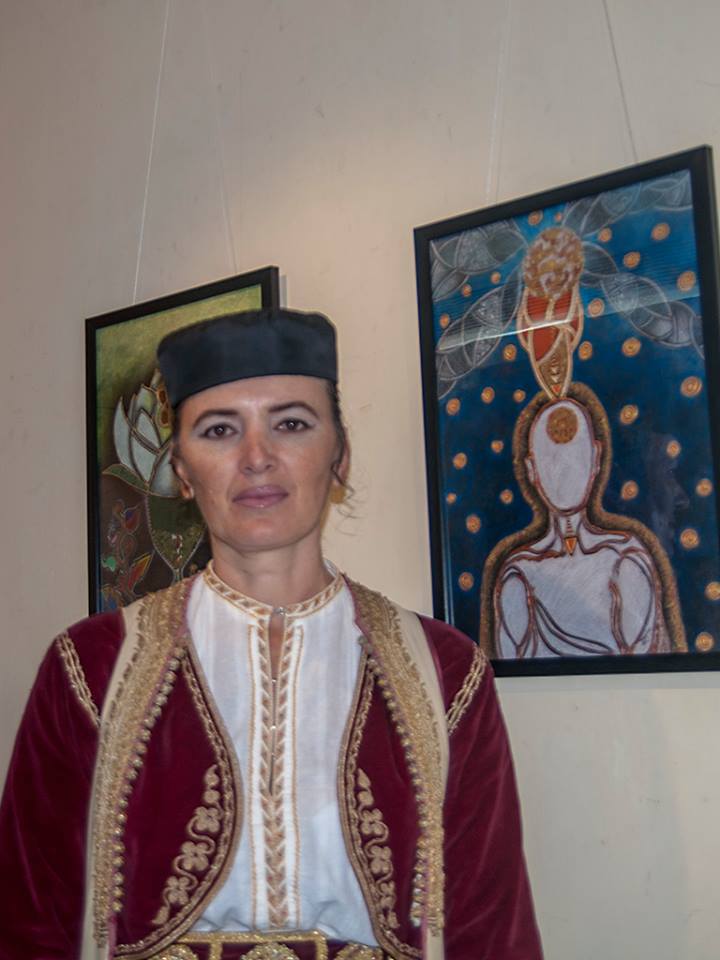
Dr.TATJANA BURZANOVIC is a Doctorate of fine Arts (graphic design) from  the University of Belgrade.She is prsently working with the University of  Donja Gorica (UDG), Podgorica, MONTENEGRO(CRNA GORA), as a Professor. She has a wide experience in the fields of graphic design, graphics in architecture, interior design. She was worked as art editor, interior designer and graphic designer at   various levels. Many of her arts exhibitions have taken place at different art galleries around the world. She has received many awards for her arts and literary works.

She has also published a book entitled - The interrelation between Art worlds-with support of the Embassy of India for Austria and Montenegro in Vienna. Her artistic philosophy include displaying of inter-relationship between art worlds (spatial and temporal arts). An artist thus mediates between nature and the spirits and yet stems from the absolute idea and serves the goal of realization of absolute spirit."Grasping the meaning through the form" is the task of the art set by the contemporary thinker is to demonstrate that building forms and creating sense are two simultaneous, intertwined, and absolutely inseparable processes in Arts. Without that recognition it is not possible to take any further step in investigating the nature of art and literature. She believes that art is a way to search the truth.  


Recently an exhibition of her paintings was held in Kolkata in the first week of November, 2016. The exhibitions have been sponsored by the ICCR with the coordination of the Embassy of India, Vienna, Austria.

How would you describe your work?

Poetry or prose illustration has been my preoccupation since childhood, ever since elementary school. Even earlier, with much less experience, I felt the need to convey and transpose what I used to read through the fine arts elements. This great need to unite two or more arts has lasted with equal intensity until today.

What / who inspired you to be an artist?

It seems to me that an artist is born, not created. I was lucky to feel that very early, already when I was only five. The inspiration is in me, and I can say that I hold it within with great pleasure, that is woven into my being. I see things, I think, and I experience things around me that way. I am an established artist, and I would like to note that when a profession that one loves is found, then that person will no longer have to work indeed until the end of life. This means that I'm not working, I enjoy my work and I hope that can be felt.


What message do you want to convey through your artworks?

My message through art is the message of the Bhagavad  Gita, LIFE CONSOLATION, TRUTH, SELF-REALIZATION, PEACE ORIENTATION TO  TIMELESS...

You have published a book entitled- The Inter-relation between Art worlds. Could you share some thoughts on the theme?

My Book THE INTERRELATIONS BETWEEN ART WORLDS is a correlation of simultaneous and successive art. Please note that what interests me is a synergy of meaning and radiation on my illustrations. The book also discusses the analogy among the various arts, such as analogies of colour frequency (Valera) and chords (harmonies) in music, and rhyme in poetry (literature) .This analogy exists in nature and it only has to be felt and presented in the right way. The more I succeed in that the greater is my pleasure. I do that sincerely from my souls, the way I feel in a given moment.

My book can be found by potential readers at the AMAZON bookstore, as an electronic publication. I used visual elements to present the thoughts and feelings from the narrative part of the book, in this case the ancient epic Bhagavad Gita. I like to say for my artwork, "READING THE IMAGE"


How is digital art currently impacting the contemporary design world in your opinion?

I'm always an advocate of the traditional, and I use digital art only as a technical option when my work needs to be published. And yet, what can be done by human hand and brain cannot be done solely by computers. My hand is an extension of my thoughts. Where used with technological advantages to a certain extent, modern design will gain in  value. Having a measure in everything is the right path. Indian art and culture were dear to you even before coming to India.

What kind of India you imagined before coming here? How much of it was in conformity with your perception?

My perception of India has not changed much. On the contrary, it was only strengthened with new values. Today India belongs to me much more than before.

You have been active in promoting Indian art & culture. Could you share your views?

I am engaged at the Faculty of Design and Multimedia, UNIVERSITY OF DONJA GORICA (UDG) IN PODGORICA (MONTENEGRO) in the learning process and  as Deputy Dean. Rector of the University of Donja Gorica proposed, from the current school year, that I should teach a course on Indian culture and at the  Faculty of Culture and Tourism, University of Donja Gorica. I accepted it with great pleasure, and our students know much more useful facts about India already now, so that we can thank the visionary thinking of Rector of the University of Donja Gorica, Prof. Dr. Veselin  Vukotic, for that fact.

PIC COURTESY - AMLAN BISWAS

4

First of all in order to find love, you have to love yourself


Recently, Power Publishers and Oxford Bookstore organized a twin launch event of popular Australian author and globe trotter Geri Hemer's books FOXY LADY and HOW TO WIN YOUR MAN AND KEEP HIM along with the audiobook versions of these two books, at Oxford Bookstore, Kolkata.


You have mixed with the A-List of the music world, foreign dignitaries and captains of industry. How do you think that wealth of experience influences your present career as an author?

Spending time and talking to people is one of my favorite pass time. I am a good listener and I always find the deeper meaning in a conversation besides what they are talking about. I find that fascinating especially when they asked me about my relationship.

What inspired you to write this book?

I was inspired by my spouse in a lot of ways. Firstly the love that we share together and how fortunate we are to have this experience Love does not come easy so I appreciate every single moment.


Can you please tell us about your approach to writing? For example, do you follow structures and writing rules? Or do you write in a free flow way?

When it comes to writing, I just let it flow. Whatever comes to mind i write and later I would go over it and correct when necessary. Things just pop into my head especially when I am having a glass of champagne.

If you could have people take away just one lesson from this book, what would it be?

The lessons I would like to send to people .First of all in order to find love, you have to love yourself. You have to trust each other.


What is your best advice for them when it comes to finding a spouse?

Every one has a soulmate out there just waiting to find that one someone special .If you tell yourself that you will never find love, it would be forever lost.

What’s that one piece of advice you’d give to everyone to stay happy?

Happiness comes from within. In a relationship you have to find time for each other. A time to talk, a time to love, a time to give and most of all a time to listen. And remember that trust is always essential in a relationship. Love is like flowers, if you don't water them they wilt and die.

Can you please tell us what we can expect to see from you in the future?

Currently I am working on another novel. Also we will be making a film here in India from one of my latest book FOXY LADY.

Pic courtesy : Power Publishers

0

A good guitarist should be a good critic towards himself in order to better him/herself everyday


In 2011, Raphael Bereau and Tizoc Romero joined forces in 2011 to create the “R2T2” guitar duo. Currently based in Paris, the R2T2 guitar duo has performed in North America, and across Europe including Paris, Vienna, Alcobaca, Ontinyent, Barcelona, Gorizia .They have been featured musicians at the International Guitar Festival of Paris in 2014 and the International Guitar Festival of Elx in Spain 2015.In November 2014, R2T2 published their first CD with Baros Records. Recently they performed at the “Monsoon Music Festival” which was organized by The Calcutta Classical Guitar Society and the Indian Guitar Federation.

What led to the formation of R2T2 guitar duo? How did the name come about?

We met for the first time at the age of 11 and 15 years old (Raphaël is 4 years older than me) we were in a guitar camp with same teacher and have kept in touch since then. After a few years we both went to Study with the same teacher Alvaro Pierri in Montreal, it is there that we started to play together and started the "R2T2 guitar duo" in June 2011. We created a large repertory with composers of the Baroque period as well as composers still alive. The name R2T2 guitar duo came out after we had a course with our teacher, he once told us (after we had played for him and we didn’t play so well) : Guys you sound like the robot "R2D2" !" After that we came out with the name R2T2 (replacing the "D" by "T" for Tizoc, the number 2 for the duo and "R" for Raphaël) therefore the name "R2T2 guitar duo" was created. 

Could you tell us a little bit about your influences?

Our influences were made by several duos around the world such as the Melis duo, Gruber Maklar, and many more; however we tried to find our own way of playing in order to perform the pieces of our repertoire in a more personal manner. However our musical influences are not limited to the guitar world but to the music in general, for Raphaël composers such as Steve Reich, Stravinsky and minimalist music in general, for myself having started music with my father who is a traditional mariachi Mexican musician, I was influenced by traditional mariachi Mexican music which had a big influence on my game today. This is also why we made several transcriptions from Spanish music such as Albeniz, Granados and more. 

Do you think it’s possible to talk about improvisation for classical music or we have to turn to other repertories like jazz, contemporary music, etc.? 

Improvisation may be more adapted for Jazz however in classical music during the Baroque period, improvising was also used but in a different way with composers such as Rameau, Bach or Couperin who used ornamentation to improvise. Also in music some interprets tend to take "musical" tubes in order to then improvise on them. In way through musical history improvisation has taken many forms.

What are some elements that you think make a good classical guitarist?

To say that someone is a good guitarist is to say that he does not only stay in the guitar world, many guitarist make the mistake to stay in their own guitar world without opening enough to other types of repertoire of instruments. Also a good guitarist should be a good critic towards himself in order to better him/herself everyday. He should not only focus on the technical aspect of the music but also on the musical part, the technique should only be a tool to serve the music. He should also be open to any type of music in order to get positive influences from different types of music around the world.  

You have performed in several cities around Europe and North America. What are some of the differences you  notice between the American and European audiences?

Concerning the different audience, every audience reacts different to classical guitar, it all depends how much the audience is open to discover classical guitar repertoire, however we tend to see that the north of Europe tends to be less warm than south European countries however in general we had good experiences with all the audiences regardless of where they were from including North America. 

Pic courtesy - The Calcutta Classical Guitar Society
How important are guitar festivals according to you?

Guitar festivals are important for student musicians because they are a mixture of concerts, masterclass, and help the students to help motivate each other during the working process, it is like a guitar camp that allows students to develop themselves at the best that they can.    

What are your favorite scores?

For myself my favorite music scores are more oriented towards south American music, which can be learned by ear than by reading music scores, however some composition from traditional south American composers or Debussy, Mahler, Rachmaninov speak a lot to me. For Raphaël he was since very young attracted to composers such as Steve Reich, and minimalistic music in general as well as contemporary music in general. 

How much do you think it’s important for a modern musician to know marketing? How much is crucial to be good promoters of themselves and their works in the world music of today?

Marketing is a very important for a musician and even an essential part.You can play extremely well but if you are unable to sell yourself not much people will pay attention yo your music. Sadly these days many times a good looking but average artist will be more exposed if he can sell himself well than an artist who is not as good looking, lacks charisma but plays very well. Also finding an agent can be very useful because you don't have to care then about the logistics and you can focus on your music. This also allows you in many cases to live from your passion.   


1

I think drummers are the "energy catalyst" in a group - Matteo Fraboni

                                                                        - Matteo Fraboni

Drummer and Composer - Vic Firth Artist from the European jazz scene, Matteo Fraboni graduated in Jazz Composition and Arrangement at Conservatoire G.B Martini in Bologna.  At the age of 27 he recorded in Brooklyn, New York, his first album "Matteo Fraboni Quintet - This is my music", as a drummer and composer with the great tenor saxophone George Garzone,(Professor Berklee College of Music), Logan Richardson on alto sax (Blue Note) Aruan Ortiz on piano and Rashan Carter on doublebass, published by the Italian prestigious Label, VIA VENETO JAZZ - VVJ n075 (Enrico Rava, Stefano Bollani).Recently  a special performance featuring live soundtrack  was done by Marcello Allulli(saxophone); Giovanni Ceccarelli (piano) and Matteo Fraboni (drums) during the screening of a silent Italian film made in 1916, Cenere directed by Febo Mari at the  at Victoria Memorial Hall (Western Quadrangle)

Why you play drums?

I started playing 'cause the music made me dream of a better world, an ideal. Now I play 'cause, despite the lively market a complicated time, I enjoy to be a force for good in this world. I like to bring something good, positive to people.

What made you take up the drums?

I started play drums when I was almost 13 years old, I was fascinated by the energy of this instrument and my attention about it increased really fast, trying to understand the styles and the sounds of this instrument. My constant perception of this instrument is always like a big toy, if you want, so you can find many different colours, and is a long journey to  discover all the possibility of your instrument.  

What was your biggest hurdle while you were in your learning stages as a drummer? Any particular pattern,notes etc?

First of all, when you start play drums, you have to manage your independence of the arms and legs, plus the sticks control techniques and being confident with your drum set. After years, you grow as a person and as a musician too - if you study- and you start thinking about many sides of music, discovering different genres and way to play with the other musicians... These thought are beyond the basic role in music, that off course you have to study.


Giovanni Ceccarelli, Marcello Allulli, Matteo Fraboni
Which was the best moment of your career?

As I am 33 years old, my career is still going on, and I think I had many best moments and I hope to have many more off course.

For sure I can't forget my studio session in Brooklyn, New York, playing with my American quintet that was totally amazing to me, like live a real dream.

Is a drummer the better band leader because he determines the rhythm and the timing?

Well, I think trying to find "the best" in any behavior of life is not correct. In particular in music, competition is dangerous and doesn't help to grow, in any case. Music should be something we share with people and a beautiful and privileged way to say to the world what we think and how we feel this historical period we are leaving. At least, yes, rhythm is a very important part in music and also in the classical orchestra, the "2nd director" is the percussionist, who gives the start to the others elements and off course as an important role. Personally I think drummers are the "energy catalyst" in a group, we can control the volumes and determine the sound of a band for sure, and I love doing that.

What is the difference between a good drum part and a great drum part?

In my opinion the great drum part happens only when a drummer sing with his drums, and don't show only how fast he can go... "Competitions are for horses" said B.Bartók.

You are a faculty in Percussion KM Music Conservatory by A.R.Rahman in Chennai. How has been your experience so far?

The KM Music Conservatory in Chennai is absolutely a beautiful high level school here in India. They have all the highest pro instruments a student can require in terms of acoustic and digital. The programs offers cover from Hindustani, Western Classical and Contemporary music languages for voice, piano, guitar, bass, tabla, mridangam, drums, classical percussion, violin, composition, (classical, jazz and contemporary) and also computer music, with amazing devices and many more.

All the faculty staff comes from different part of the world and is really high level, always kind and enthusiastic of what they are doing with all the talented students we have, and this determine a very good atmosphere inside KM.

I invite all the guys who wants study music seriously to keep an eye out KMMC, because is the only Conservatory of his genre in all India, and definitely I'm enjoying my time there, it's a lovely experience share what you love since you're almost a child, with the students over there.

Any advice/message to the budding drummers/musicians?

Like Charlie Parker said, "Study whatever is on your power about music, but when you play forget it and play what you feel in that moment !"

PIC COURTESY - AMLAN BISWAS


Check out his pages

https://www.facebook.com/matteofraboniquintet/
https://www.facebook.com/MatteoFraboniOfficial/


0

“My advice to young people is to seek self-knowledge”


Luciana Fiel is a Mentor, Master Coach, writer, facilitator of courses and workshops, like writing words of motivation, enthusiasm, and support and teaches people through tools and personal development techniques to achieve goals, to have better quality of life and live a happy and meaningful life. She is a pioneer in Brazil in the Executive Training, the Parental Training - Families, Adults, Adolescents and Children with Attention Deficit, Hyperactivity and Impulsive.


Could you please explain your core philosophy?

My philosophy is that the LEV Method - The Leader That Is In You is based on love and follows five principles:
 1. Take full responsibility for your results. 
2. Hold an open mind. 
3. Minimize their julgamentos.
4. Desafie your limiting beliefs. 
5. Foque in your personal improvement

What is the methodology of LEV?

The LEV Methodology is an educational method of personal development, tested and proven to accelerate results and help people develop skills and competencies through training strategies, tools and techniques. All can be leaders and make a difference in people's lives, achieve their personal and professional achievements.

How would you explain be a Multiplier Method "The leader in you"?

Wisdom is in the eyes and dreams of each one, the ability to become a better person every day, by their own will and determination. Wisdom is the passion for life, the resolutions and attitudes that transform the world. In this context, education plays a key role. Help more people discover your skills and talents, becoming self - reliant and building a better world!

To be a multiplier is necessary to love the human being in its entirety, to seek their spiritual essence of light and commit to personal improvement. This method has the focused leadership in those sources as common as ours, but that evolved throughout his life, faced challenges and obstacles, rather than bend the face of difficulties, managed to make every barrier source of inspiration and overcome to reach the goals set for your life. The leadership of this kind is what we call genuine leadership.

In that case, the leader is not one who achieves results through people, but with people. It goes beyond the characteristics of unusual leaders, untouchable icons that are part of human history and filled the centuries as strong figures. In this perspective, the real leader is a man of action, consistent between the verb and action, and with their perception, experience and sensitivity, know how to drive so well the symphony that emanates from a hybrid team, like a great conductor governing a great tuned orchestra, managing to bring out each person's enthusiasm necessary to differentiate everything it claims to do this universe unstable, dynamic and evolving.

What is your advice to the youth of today?.

My advice to young people is to seek self-knowledge, define what you want, have a specific objective with short targets, medium and long term. Focuses on the process while the result is not enough, ie have consistency in the actions, do a little action every day on the way to your goal and finally believe you! To keep motivation is important you celebrate your small achievements and the second step is important you reduce the daily targets to give you feelings of fulfillment and not frustration. Only fail who gives up, never give up on you and your dreams.

How was your experience in Kolkata?

It was an experience of transformation, this city welcomed me and contributed to my growth with all its variables. I am a devotee of Mother Teresa, I admit the love she had a leader who inspires me and also follow the philosophy of Ananda Kirtan, meditation, silence and vegetarian food.

(Next year the LEV method will bring a group to immersion in Kolkata, with coaching and meditation)

0

“Cinema festivals play a key role concurrently with distribution networks”


Arnaud Gaspart , First Secretary, Embassy of the kingdom of Belgium in India and Andre Ceuterick,
executive director of FIFA at SRFTI. (
(pic courtesy -SRFTI)

Recently, Embassy of Belgium with Wallonie-Bruxelles International (WBI), Goethe institute Max Mueller Bhavan, Italian Embassy Cultural Centre,  Camões-Portuguese Embassy Cultural Centre  & Embassy of Switzerland in India, in association with Satyajit Ray Film & Television Institute, & Culture Monks presented the 1st edition of the ' Festivals from Europe" in Kolkata, from September 30, 2016 to October 2, 2016, at the Satyajit Ray Film & Television Institute, Kolkata partner. This film festival brought together a selection of 11 short films, 4 documentaries, 5 long feature films from the following film festivals in Europe - Berlinale (Germany , Festival Du Film D’amour De Mons (Belgium) ,  Lisbon & Estoril Film Festival (Portugal) , Festival del Film Locarno (Switzerland) & Rome Independent Film Festival (Italy).

Mr. André Ceuterick, Executive Officer of the ‘Festival du Film d’Amour de Mons’ (aka FIFA) was present at the event and shared his views.


How would you characterize the current state of the film industry in Belgium?

The Belgian film industry is doing quite well in comparison with neighbouring countries, but our tax system has a lot to do with this: our “Tax shelter” not only supports Belgian cinema, but also attracts foreign directors, whose films are then credited to Belgium.

The Flemish audience is more responsive than the Walloons (French-speaking Belgians). About 50 Belgian films are released each year. It is less than Germany, France or Spain, but it’s not so bad for a small country with only 11 million inhabitants.

How does the government support the industry and what kinds of films does it support?

The Centre for Cinema and Audiovisual Media aims primarily at supporting and promoting audiovisual works. It is therefore competent at helping to produce, co-produce, promote and distribute films in cinemas. It also helps audiovisual operators, festivals, distributors, cinema managers as well as digital broadcasting facilities. This concerns feature, short as well as documentary films.


Master class with (from the right) Arnaud Gaspart , First Secretary, Embassy of the kingdom of Belgium in India
and Andre Ceuterick, executive director of FIFA  h
eld at SRFTI (pic courtesy -SRFTI)
What kinds of stories do Belgian filmmakers want to tell?

Belgian cinema is basically an art-house cinema, which generally tackles human and social subjects, which may also be dealt with in a light-hearted and humorous way. Most of the time, Belgian cinema does not take itself seriously. There is no “star system”. We cultivate a historical taste for surrealism as well. Since the nineties our films have regularly been given awards in international festivals. Our directors are famous everywhere. We are therefore really proud of the world-wide reputation of our cinema.

What is the role of film festivals? Do you believe that the festival could also act as a bridge to define international relations on the basis of political power and geographical spaces?

Cinema festivals play a key role concurrently with distribution networks: they promote films before their official release, and also allow films - more and more numerous - which will sometimes never be released in our country’s cinemas to be shown. Within this framework bilateral exchanges and the strengthening of north-south relations make it possible to broaden horizons, to allow audiences to discover works from different cultures and cinema works to circulate.

How was your experience in India?

It was an intense and fascinating experience with rewarding exchanges, nice meetings and the discovery of a complex and fascinating cultural world. I really hope that I will have the opportunity to extend and broaden this first experience. 

1

copyright © . all rights reserved. designed by Color and Code

grid layout coding by helpblogger.com