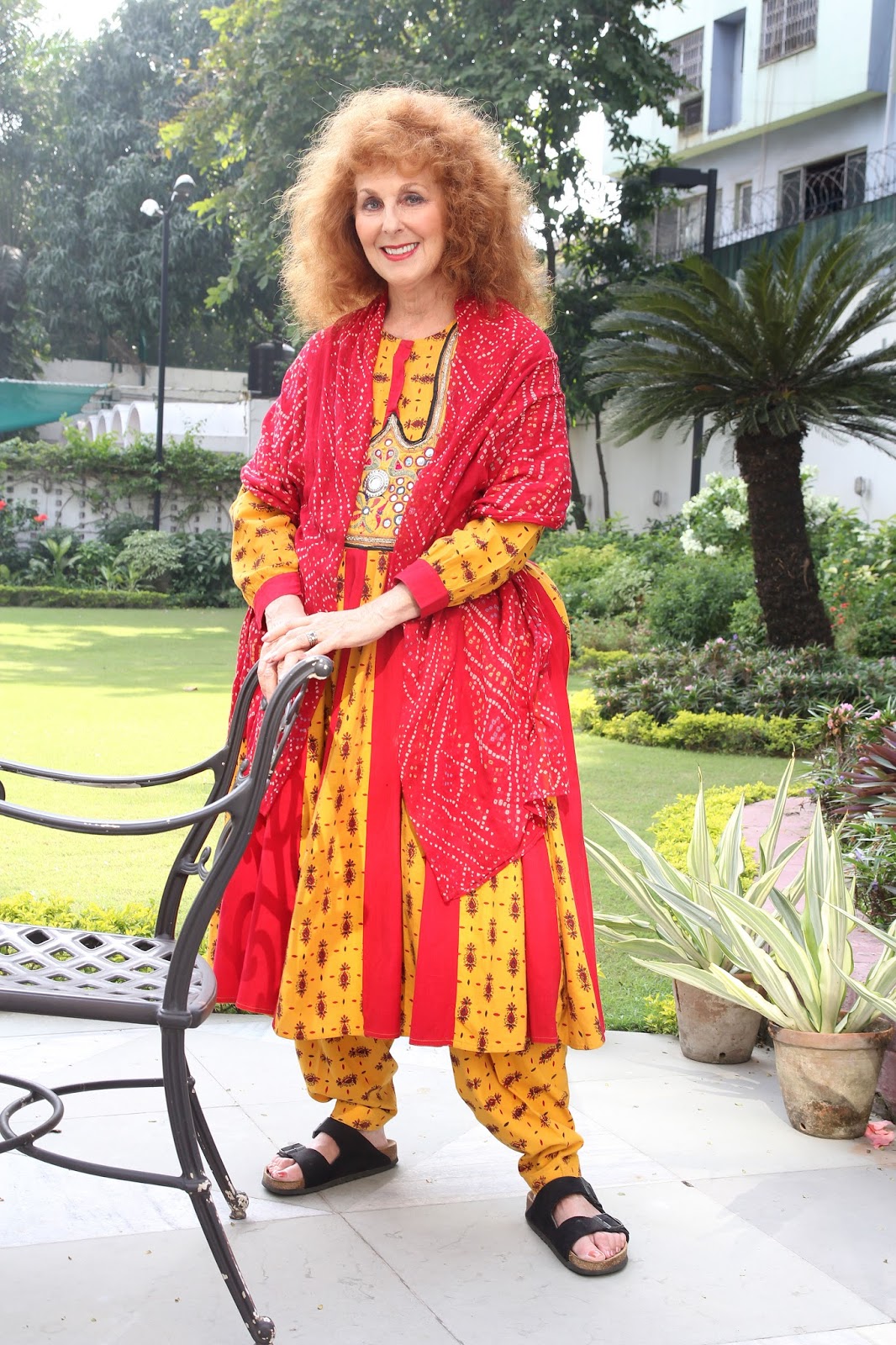
Stopping child marriage and empowering the girl child

                                                                                                        Kanika Barman, Megan Mylan and Monica Barman

A United Nations report in July said that India has the sixth highest prevalence of child marriage with one in every three child brides living in India.

In patriarchal societies like that of India, a girl child is often perceived as a burden by her family because she is not seen as a financial contributor and that her family has to be pay dowry to get her married. The cost of dowry can devastate a family financially; so many families do what they can to avoid paying a large dowry. In many cases, this means marrying a girl off young, even when she is 12 or 14 years old. By tradition, if a bride is very young, dowry is sometimes reduced or not required. Once married, girls usually have to drop out of school. But many are fighting this regressive trend and building up awareness to create enlightened girl-child friendly societies.

In the last three years, over 40,000 adolescent girls from West Bengal have bloomed into the latest crop of breadwinners from rural India. This is the story of After My Garden Grows, a new documentary by Megan Mylan, the Oscar-winning director of India's ‘Smile Pinki’. In the movie ‘After My Garden Grows’, Monica shuns the idea of becoming a child bride by growing her own garden, thereby becoming an asset to her family. Her family had married her older sister off. However, Monica decided that this was not the path for her. In the documentary, it is shown how Monica goes to the market and earns 760, starting her journey as an income generator, and changing her family’s perception on girl child.

The film premiered at the prestigious Sundance Film Festival this year. It was produced by Principe Productions and supported by the Sundance Film Institute in partnership with the Bill and Melinda Gates Foundation (BMGF) with additional support from the Kendeda Fund.Talking about the documentary on the sidelines of the screening of the documentary at the Kolkata international film festival, Megan says, “Ideas of social change and stories of people evolving on their own through change are what pull me to make documentaries on their enterprise and hardship. My films, though they deal with poverty and ignorance, are aimed at hope because I see hope in the way Monica is trying to change her life along with the lives of other girls in her village. She is knowledgeable about what she is doing and talks about this in my film.”

She feels, “Fathers need to understand that the best economic investment they can make for themselves and their daughters is education. It's to empower them to become economic providers of the family.I am not going to gauge its impact by finding out if the last girl was not married before 18 because of the movie. But the fact that Minister Maneka Gandhi has decided to include the film in the ministry’s basket of films to be shown in rural areas of 100 districts is heartening." In early 2012, Landesa, a rural development institute partnered with Women and Child Development Department of Government of West Bengal, India through the SABLA programme, which aims at improving the nutritional and health status of adolescent girls and to empower them through education on life skills, health, nutrition and vocational skills. Landesa brought in an innovative approach in the pilot implementation of the scheme in a block at Coochbehar District by introducing land component in both life skill education and vocational skill development in the empowering process.

Supriya Chattopadhyay, Communication Manager, Landesa, said, “Poor, rural girls in West Bengal face a host of vulnerabi- lities that threaten their social and economic wellbeing. These include extreme poverty, malnutrition, gender-based violence, lack of education, trafficking, and child marriage. Numerous factors play a role in creating girl’s vulnerabilities, but two in particular are at the heart of the Girls Project. One is how families and communities perceive a girl’s value. Another is the poor economic reality. The issue of child marriage illustrates how these factors converge to the detriment of girls. He adds, “Landesa’s curriculum includes teaching girls about their rights to own and inherit land, and intensive gardening skills. The goal is to improve the girls’ nutrition in the short-term and in the long-term, improve the girls’ understanding of their land rights to allow them to exercise those rights when they are women. Landesa is working with partners to explore integrating the initiative with the existing ‘Kanyashree’ programme by the state government which aims at continued education and delayed marriage for the girls.” Presently, Landesa is working with the government to scale this innovative intervention in five districts beginning in 2015. Landesa is working with partners to explore integrating the initiative with the existing ‘Kanyashree’ programme by the state government which aims at continued education and delayed marriage for the girls. The project’s intended high-level outcome is that up to 1.4 million girls will be positioned to realize land rights as women, improving their economic and social prospects and empowering them to reduce vulnerabilities that they face as adolescents. An estimation suggests that, once scaled to reach one million girls, the programme will cost an average of only 60 Indian Rupees/1 US Dollar per girl per year.

She signs off, “At a time when we see daily reports of women's rights in India under attack, it is a privilege to be able to share this positive story about young women empowering themselves.”

After My Garden Grows, is a new short documentary by Oscar winning director of Smile Pinki, Megan Mylan. The film tells the story of Monika Barman, a rural Indian teenager growing food to feed her family and the seeds of her own independence in a tiny rooftop garden. 

2

Art does not have a goal oriented reason- Rolf Nikel


Recently German Painter, Rolf Nikel organized an art exbhition "Beats on Brushes” at Academy of Fine Arts , Kolkata. Rolf explains his work “My works are actually not pictures in a classical sense of images. They are very real as what they are. They are works which reveal themselves with certain easiness in real space. And they are able to – so I hope – unfold themselves directly (without any
intellectual questioning) in the perception of the viewer. They are not determined by a frame to the outside or by a certain theme. “  He adds, “Images and media always mismatch the measurements e.g. by putting the world into a frame or squeezing it onto the display of a mobile phone. Landscapes are compressed. Small things are magnified deliberately. The perception in these cases has nothing to do with the original distance anymore. Therefore I am interested in throwing back the observer of my works into his original sense of scale in his own physical size. People always want to explore the sense and the purpose of art. But art does not have a goal oriented reason.”


0

Digital Stories can make students creative and enhance media literacy - Jessie Curell


Jessie Curell,  is an ex Team Leader and Education Specialist for the National Film Board of Canada. With a university background in Anthropology, Communications and Media Production, her Master’s Degree thesis project was a four-month Canadian workshop tour teaching teenage girls feminism, media literacy and media production. Delivering workshops to youth is a passion for Jessie, sharing with them skills and techniques which they can apply to any medium they wish to put into action. Her latest workshops have been focused on the NFB’s new iPad animation application “NFB StopMo Studio” which brings a semi-professional animation studio into any classroom or home, with limitless possibilities for fun and creative expression.

What are the latest trends in the field of Digital Storytelling?

I don’t believe that the format of Digital Storytelling (personal narrative made up of image, narration, music, and text) is changing as much as the quantity of stories being told is expanding in exciting new directions around the world, and being distributed online on more and more blogs and education websites.  The Centre for Digital Storytelling began in Berkeley, California about 10 years ago. It has certainly caught on in the USA, Europe and other parts of the world are slowly catching on with it.

Why is it important for children and communities to tell their stories in media?

The first step is introducing students to creative thinking with regard to media messages and stories.  Why was this story/message created? What is the main message?  Who do you think made it?  Who do you think would feel left out/unrepresented from this message? The next step of media literacy is creating your own message.

Creative expression is important for people of all ages because it demands them to shift from a passive consumer of media/stories/advertisements, and asks them to take an active role as a creator and sharer of their own opinions, ideas and stories.  Before digital technologies and the internet, it was only a select few filmmakers, broadcasters and media tycoons who had access to this privileged opportunity.  Now with a simple camera and basic computer software, anyone can take this role and speak up and out about an issue that concerns them, or share thoughts, feelings and ideas with others.

What are the benefits of Digital Storytelling for teachers and students?

This project encourages and supports the students through the process of story development and production, as the teachers are letting them know that their opinions and ideas are important, and that the world needs to hear them. It is a very empowering experience to be a filmmaker, and Digital Stories are introductory versions/formats of documentary films.  The skills acquired during this process are infinitely useful in this increasing media-savvy world.  With new story-boarding, photography and iMovie editing knowledge, many new doors and opportunities may open for them all.

How do you perceive the Indian education system?

I have only spent a total of about two and half months in the country. In terms of Digital and Media Literacy though, I do have a sense that this is a curriculum and teaching area that needs more attention and work.  Students seem to now have access to many of the technologies and the internet, though I don’t get the feeling that they have been taught media literacy techniques nor ethical considerations when creating their own stories.
0

A dancer and purveyor of grace and talent, meet Cirque du Soleil's Nicole Montagne


Nicole Lamontagne,  a classical and contemporary dancer from Montreal, has been with the world famous Cirque du Soleil since 2006. She conducts auditions and conferences all over the world to recruit the best dancers for the continuous casting need of Cirque du Soleil. Prior to working for Cirque, Nicole was a Principal Dancer for Les Grands Ballets Canadiens for seven years, soloist for Ballet British Columbia for four years, and a soloist for Les Ballet Jazz de Montreal for three years. She also has her college certification in administration and accounting, has worked with directors on high priority reports, and is at ease managing tight schedules and heavy workloads.

Her musical sensitivity along with her acute sense of quality of movements are part of the elements that explain why so many choreographers and collaborators have chosen to work with Nicole in dance as well as other various disciplines like artistic skaters and contortionists. Nicole studied music from the age of six. During her career, Nicole explored many dance styles: classical dance, jazz, modern dance, tango, and folk dance. While in college, she trained in theatre. She collaborated in many television shows and operas, which gave her opportunities to work with multi-disciplined artists.

Who… or what in particular… was the biggest inspiration for you as a dancer/artist?

Actually, I can not say that one event, person played that kind of role for me. I truly met incredible people along my path and got to work with amazing choreographers. My inspiration came from them being inspired by my dance. Of course I have certain dancers that I looked up but that did not play a role in my desire to dance.

Have you faced resistance in your career for advancement, or do you cultural resistance for being a woman taking the stage? (If so how do you deal with it)?

Actually, in my country there is no such resistance. We have a strong need to take our place and work hard to stay there. It is more the place of the woman then the man actually in the world of Classical ballet. What was difficult at the beginning for me is that I was trained in the school attached to the dance company I worked for and since I was there from a young age, it was hard to be looked at as an adult. They saw me even at 25 as the little child.

Did you find the pressures of working in your industry significant with regard to feeling the need to have a “perfect” body?

Not at all. I was fortunate to never have a weight problem. I never dieted. I saw many dancers around me with that struggle. I felt bad for them but I can't say that there was such dramatic pressure. It is just common sense to be healthy when you are doing such hard physical work. And not even that, everyone should eat healthy just for the sake of it.

How do you find a work-life balance — what are keys to balance?

That is hard still today for me. My brains is constantly chattering. As a dancer, I often went into difficult periods because I felt my career was stopping me from having a normal stable life. Twice I retired and had said it was over but soon I would realize that breathing was harder when I was not dancing. It was what I was born to do and could not escape my destiny. I soon realized that my concept of balance in my life was based on the "Cinderella" syndrome and that if you ask me now I know that that kind of life I was dreaming of would have made me a very unhappy person. 
0

“Email is Not Dead. It is here to Stay" -- V.A. Shiva Ayyadurai, the Inventor of Email.


V.A. Shiva Ayyadurai is a scientist-technologist, entrepreneur and educator. He has been an inventor since the age of 14.

In 1978, Shiva invented email, while a 14-year-old high schooler, working as a research scholar at a small college in Newark, NJ.

Shiva invented and defined “email” as we all know and use today when he created a computer program which replicated electronically all of the functions of the interoffice paper-based mail system: Inbox, Outbox, Memo, Address Book, Attachments, Folders, etc. --- the system that was the foundation of every office, from the President of the United States, on.


The United Stated government formally and legally recognized Shiva’s invention of email  by awarding him the first US Copyright for “Email”, “Computer Program for Electronic Mail System”, in 1982, at a time Copyright was the only way to protect software inventions.


First Outstanding Scientist Technologist of Indian Origin. He created Systems Visualization, a pioneering new course at MIT, in the Department of Comparative Media Studies, to enable MIT students to communicate through art and design complex systems. He is also the Founder and Executive Director of the International Center for Integrative Systems and Innovation Corps.

He had an interactive session with Abhijit Ganguly about the relevance of email, his new book The Email Revolution by Penguin, and about Innovation Corps --- a foundation he launched to enable youth innovation from India to the United States.


It is widely felt that the email is dying. Is it true? What can be an alternative? 

When you look at the origins of email, email is the electronic version of the interoffice mail system. When people say email is dead, they say that out of ignorance. When we understand that there are three types of communication streams, this ignorance becomes apparent, as I discuss in The Email Revolution.

One stream of communication is short messaging. Short messages are sent when you want to get out the message very quickly.  Such form of messaging dates all the way back to smoke signals, drum beats, in ancient times.  In modern times, when a secretary takes a little note or leaves sticky notes --- that’s a form of short messaging. That’s very similar to our current digital communication with forms such as chat messaging, SMS, or Twitter.

Another stream of communication is community messaging. That dates back all the way back to cave paintings. People would get together and do cave painting as one community, each “posting” their part of their painting --- the original “Facebook”. In this lineage, we have the community bulletin board. That’s essentially what a blog is today.  The communications are posted, made public, and everyone can give their “two cents”.

The third stream of communication really comes from formal business communication. This stream of communication dates all the way back to when writing began, originally done for commerce, on stone tablets, then papyrus.In the office environment this appeared as the “Memo” --- interoffice memos. The memo was very structured, and required an entire system --- the interoffice mail system to support its processing and distribution, with a complex set of functions and parts.

Between 1978 and 1993, before the web took off, email was used in the business environment. You didn’t need the Internet. Email was used on Local Area Networks (LANs) or Wide Area Networks (WANS). In 1993, when the Web came, we saw web-based email applications, such as HotMail, and AOL, which had the same functions as email, the first system I created in 1978. For consumers, email was now avaiable supporting B2C communications.  A consumer could send an email to the White House or to Nike.
With the coming of SMS,  some experts proclaimed “email is dead”. When Facebook and bulletin boards came along with the discussion threads, people like Mark Zuckerberg also started making comments, “email is dead”.
Gmail originally provided just email, then added chat (short messaging), and then began adding community messaging functions like Facebook, in Google Plus. Facebook had to respond to that. Facebook had chat and community messaging but did not have email. The day Zuckerberg said email was dead was the same day Facebook was adding email functionality!
So when you look at Facebook and Gmail, they really have those three streams of messaging.  It is absolute insanity to say email is dead, when the facts show email volume continues to grow, and more commerce and business is done via email than any other digital medium.

For business people, the key is to recognize that email is going to be here for a long time. The case studies we share in The Email Revolution provide a range of examples of how to exploit email in creative ways to get, keep and grow customers. In fact, email is becoming more and more an acceptable part of formal communications.  In the last five years, some of the European courts have ruled that email can be used to issue warrants and summons, for example.

What do you think about the state of research in Indian educational institutions? How can research and innovation be encouraged in these institutions?

I was appointed in 2009 to set up the largest innovation initiative by Prime Minister Manmohan Singh from CSIR, to launch CSIR-Tech.  I was recruited as an Additional Secretary, Scientist Level H, in the Indian government.  I saw first-hand, the incredible talent within India and its scientists at CSIR, but a feudal, nepotistic infrastructure never allowed those with real merit to rise.  In fact, Lab directors were afraid of their own subordinates, that if they created something of relevance, the subordinate would get credit and supercede them!

I wasn’t able to fulfill my goals at CSIR --- because, the bureaucrats actually were incentivized to suppress Indian scientists.  Some have called CSIR, the Council for the Suppression of Indian Research. The bureaucrats wanted me to be like a Barbie doll, so they could tell the Indian public, we hired this MIT guy and all is well.  The problem was that I actually wanted to help India, my people. I naively thought I was hired to bring change. They could not bribe me with the nice house, servants, car, etc.  In some sense, they made a big hiring mistake.

I met many scientists --- some producing amazing innovations but the incentive model had been stifled. CSIR supported people writing papers and simply publishing patents ---not actually creating innovations --- the original intention of CSIR.

The truth is that there are a lot of smart people in India. Since 1947, India has not  indigenously created any Nobel prize winners in science or medicine. But if you follow my journey in inventing email,  I innovated email before I came to MIT. Email was created by a 14-year-old Indian boy, in one of the poorest cities in the US.
What was the ecosystem that allowed me to innovate email in 1978?
The ecosystem was one of freedom and respect. There was no oppressive hierarchy. Even at the age of 14, I was given tremendous respect.  I learned that innovation can happen anytime, at anyplace and by anybody.
Business entrepreneurs already know this. You don’t need necessarily go to IITs or the MIT to innovate.  I’ve been an innovator before MIT, during MIT and after MIT --- so I know this all too well.   I think ten to fifteen years from now, hopefully sooner, everyone will recognize that anyone can innovate --- and it won’t be that surprising that a 14-year-old created email in 1978.
Innovation is part of our DNA, and no one should be owning or controlling innovation. People who control innovation are as bad as Monsanto trying to control seeds and monopolize farming. Currently, the world needs to create 3 billion new jobs in the next 10 years. Right now we have 1.2 billion --- that means we have a deficit of 1.8 billion new jobs.
Creation of those jobs is not going to happen by putting capital into a couple of  “Innovation Centers” in major cities or hubs.  Innovation has to dispersed everywhere, so it can grow like an uncontrolled, wild seed --- if we are going to meet the need of those 1.8 billion jobs.
Last August 2013, back in Newark, NJ, the home of email, I have launched Innovation Corps. We want to identify twleve students in the 14-20 age group in the US and an equal number in India. The aim is to unleash innovation in inner-cities, villages,  by identifying and supporting those teenagers in high school who wish to see their ideas translated into tangible products and services.

Innovation Corps will support such teenagers with both cash as well as services to foster an environment for innovation, by providing them a similar ecosystem I had in 1978: mentors, good teachers, acess to infrastructure, some capital and local and community support.

All of my proceeds of The Email Revolution are going towards Innovation Corps.


How can politicians use email?

Politicians can use email to understand their constituency and respond to their needs.  Bill Clinton was aware of this as far back as 1993, as I share in the book.  Back then, I worked with the White House --- my second life with email, when I won a contest to automatically analyse and sort incoming email, sponsored by the Clinton White House.  That experience led to me starting EchoMail, Inc. 
 A few years later, I had dinner with President Clinton, and I shared how email could be used for extending the broadcast TV medium to have interactions with his constituency.  He got this, and understood this better than most senior VPs of Marketing in major organizations.
In an email, people tell you things that they don’t do in a simple marketing survey because it’s more intimate. By mining email, businesses can understand customer needs, get ideas for new products and be responsive.
We also worked on George Bush’s campaign. Email helped them in winning the elections. They used email to build relationships one-on-one by integrating their grassroots efforts with email communications.. I would suggest for any politician, while social media is good for getting “follower”, email is where one can convert followers to voters.
What is your view on the Indian youth?
I think that India is poised for a very big revolutionary phase. The youth are extremely bright and nobody can mislead them. My role is to inspire the youth and make them recognize that India has a huge history of innovation.


1

Tagore was an internationalist – how I would have loved to be with him when he met Albert Einstein!- Lee-Alison Sibley


She is a singer, an actor, a writer, a social activist and a teacher.  She marched for peace with Dr. Martin Luther King, Jr. and works with a number of NGOs to alleviate poverty in the poorest neighborhoods.  She is Lee-Alison Sibley, an American who loves India.  Lee has a Master of Music degree and a Master of Education degree.  She has sung, taught, lectured and acted all over the world.  From folk music to opera to Broadway, Lee has done it all, and while living in Kolkata added Rabindrasangeet to her repertoire with her album “The Distant Near.”


How did your tryst with Rabindrasangeet happen? What has been your initial inspiration?

It is interesting that you use the term “tryst” as if it was a romance and the songs were my lover!  I guess in a way it has been like that since 2002, when I first heard the songs.  I had been reading Tagore poems for many years before that, since I was young and impressionable, but I hadn’t heard the music until I was welcomed to Kolkata with a performance at the American Center by Pramita Mallick.  That changed everything for me – I fell in love with the songs and asked her if she could teach them to me.  I’m fairly sure Pramita did not think I was serious at first, but as I’m a professionally trained musician, a singer, I followed up and learned the songs I later performed with and with other artists. 


How challenging was it initially?

Pramita is really intelligent and savvy – her English is impeccable.  When she heard my voice for the first time, she knew that my western classical training would not be appropriate for all the Rabindrasangeet.  She chose those songs whose melodies were adapted from British folk tunes by Tagore and we both decided my voice was most suitable for those songs.  As Pramita is an excellent teacher, I learned the songs quickly and started to perform them almost right away.

What does Tagore mean to you?

People have heard me describe my first visit to Jorasanko when I saw where Tagore “breathed his last” and I burst into tears!  Tagore was a visionary poet, a man who knew that societies need to break down borders, who knew women play a most important role and need education.  He was an internationalist – how I would have loved to be with him when he met Albert Einstein!  He was a risk taker, one who was not afraid to tell the British to keep their knighthood – he didn’t want it after what they had done.  I admire him on so many levels – it would take hours for me to explain.

What is your favorite Rabindrasangeet number?

That is a most difficult question as I love so many of the songs.  When I sing “Ami chini go chini” I feel I am the bideshini he wrote about.  With “Prancay choku na chay” I can flirt and have fun with the audience.  In “Alo amar alo” I am transported to the light and “Amra shabai raja” reminds me we are all equal under the universal laws of the heavens.  My first song, taught to me by a Bengali officer at the US Consulate, Tinku Roy, was “Phuley, phuley, doley, doley” which I have sung hundreds of times around the world, in NGOs everywhere and even at dinner parties.  And it doesn’t stop there…

What is your take on experimenting with Tagore’s songs?

Would you believe me if I told you I was meant to sing the songs, that I was meant to be in Kolkata for three years, that I believe Tagore would have appreciated my interpretation of his music?  All of this is how I feel.  I left a piece of myself behind when I left Kolkata and I will always feel at home there.  I believe in Tagore’s philosophies on education, nationalism, the caste system and the treatment of women in society.  I think we would have gotten along very well indeed had we met face to face.

What are your future plans in this field?

I left Kolkata in 2005, but never stopped singing rabindrasangeet.  I performed at the Bangla Samelan that year in New York City and at the Bangla Mela in Chicago where I was also a chief guest.  I sang in New Jersey at a fundraiser for children with cancer, organized by Bengali Americans and in California in 2011 when I reprised my “Two Worlds into One in Peace” concert with Odissi danceuse Sanchita Bhattacharya.  This year, 2013, I sang “Alo, amar alo” in Delhi three times during Diwali celebrations.  Clearly, I will never stop singing these songs.


0

Hip-hop literacy, a lot of it focuses around developing critical consciousness, by bringing thought and action together


Hip Hop Psychology (www.hiphoppsychology.org) is the study of the psychological meaning of Hip Hop discourse (emceeing/rap, dance, visual arts, music production, spirituality, culture and education) and human development as it applies to educational and therapeutic contexts.Recently, Peddro's Salsateca (PDST), Kolkata in collaboration with Hip Hop Psychology,USA organized a workshop in Kolkata.   Abhijit Ganguly spoke to Lauren Gardner, Debangshu Roychoudhury, and Debanjan Roychoudhury of Hip Hop Psychology on the sidelines of the wokshop and performance. Debangshu is the Artisitc Director, while Lauren is the Operations and Organization Specialist and Debanjan is the Youth Organizer and Marketing Specialist for The Hip Hop Psychology Performing Arts Movement. 

Hip Hop Psychology…..

Hip Hop Psychology basically breaks down to three prongs:

It has to do with scientific research in the areas of psychology, human development and education – on how urban arts, particularly hip-hop and the various variations of hip-hop, including dance, music, the culture, graffiti, the verbal aspects of hip-hop art, how that influences youth development, and how hip-hop art can influence things such as literacy, psychological well-being, and social-emotional development.

The second prong has to do with consulting services, which means going global, interacting with hip-hop culture that we see as based in New York City and bringing that to other places in the world, as a form of diplomacy to create a hip-hop based infrastructure, creating schools that can utilize hip-hop arts. 

The third one, our favorite, is entertainment.  We go around and we perform pieces that capture the spirit of Hip Hop Psychology, which has to do with experiences, emotions, expression, social justice, and taking an activist stance.

Hip-hop dance in terms of health……

Some of our students have created different dance pieces to talk about domestic violence, experiences in their homes/communities/classrooms, about feeling lost, confused, not understanding their identity, coming out as gay, etc.  Some of the girls were saying, at school they were always fighting and arguing – and that they felt it’s ridiculous and need to stand together and do something. The young ladies suggested they should dance together, and so express solidarity.  So in terms of health – there’s the physical, mental, but also spiritual aspects of health.

Hip hop literacy…… 

Hip-hop literacy, a lot of it focuses around developing critical consciousness, by bringing thought and action together. It is also about utilizing hip-hop to increase literacy, to have people be critically conscious about not only the consumption of media, but also about the production of their own media, creating conscious consumers AND producers.
With hip-hop, over time, you want to see an increase in vocabulary usage, because the more you rap, the more you engage in the use of vocabulary.  There’s a thing, when you rap, it’s called “multi-syllabic uses”…..it’s a lot of syllables, so you should be seeing a greater amount of syllable usage per sentence, and obviously a greater amount of syllable usage belongs in words that are much more profound or abstract.
One of the things you should also see is a truncation of an argument, because hip-hop is written in a more truncated manner – it’s four beats per bar, so “June one-seven ninety-four dropped from Heaven” – right – so making an argument using 4 beats allows for a more truncated and articulate argument.

Misconception…

I think that one of the things, when people say that Hip-hop has misconceptions, we mean one strand of hip-hop, and that is a corporatized commercial iteration brought out by a few major companies, which probably only represents 1% of the entire global hip-hop culture.  So it is like boiling down all of Indian culture to one Bollywood movie. Both forms of commercialization are focused on profit, not developing culture.  But when we look at the global hip-hop culture which we saw today through our collaboration with Peddro’s Salsateca, it is much more complex.  Some of the things that come across as negative are just real expressions of the issues that are happening in life. We also are able to see how youth across the globe, especially here in India, express their hopes, dreams and plans for the future given the rapid changes and the fact that the majority of youth are being left behind economically.
0

American band brings traditional fiddle and banjo music to Indian shores

                                                                                                           The Corn Potato String Band

The Corn Potato String Band , a four member band comprising of Aaron Jonah Lewis, Lindsay McCaw, Aviva Steigmeyer and Roy Pilgrim, has delighted audiences with its driving fiddle tunes and harmonious singing across the United States, Europe, and Mexico. The band members are all multi-instrumentalists who are dedicated to continuing the traditional fiddle and banjo music and dance of central southern part of the United States.  Further, guitar, bass and mandolin, are some of the musical instruments that they strum while covering different antiquated styles including ballads, “ho-downs,” country “rags” and southern gospel.

Explaining the name of the band, Lindsay says “The name of the band is something we just picked up because we thought it sounded comical. It is silly but also reflective of what old time bands used to be called.  Sometimes groups would be named after a nearby Mountain, “The Bald Mountain String Band” or something in the barnyard like “The Crowing Rooster String band”. So, we picked our name from farm produce.”

When asked about the scenario of contemporary folk music in the US, Aaron feels, “The folk music scene in America right now is taking a hugely different shape. There are people like us playing traditional old fashioned folk music. Then there are those who are living in the 1960's like the kind of music played by Rudy Catherine or Pete Seeger. Then there is also newer folk music which is not much connected to what we do."

He goes on to add, “So far as our community goes, it is a pretty small one. I think it represents just a thousand or so of the 100 million Americans. Most of us know each other and are very connected. We play the music for each other and for fun. Most people aren’t playing this music professionally. For example, a farmer, or someone doing some kind of labour or working in a shop, plays the banjo or the fiddle in his free time. As we say, it’s more fun to play than listen to music. It is easy to play. It’s easy to get into it. It’s not specialized. It is an old fashioned form of entertainment.  It is especially attractive to people who might have had enough of mass media entertainment.”
0

copyright © . all rights reserved. designed by Color and Code

grid layout coding by helpblogger.com